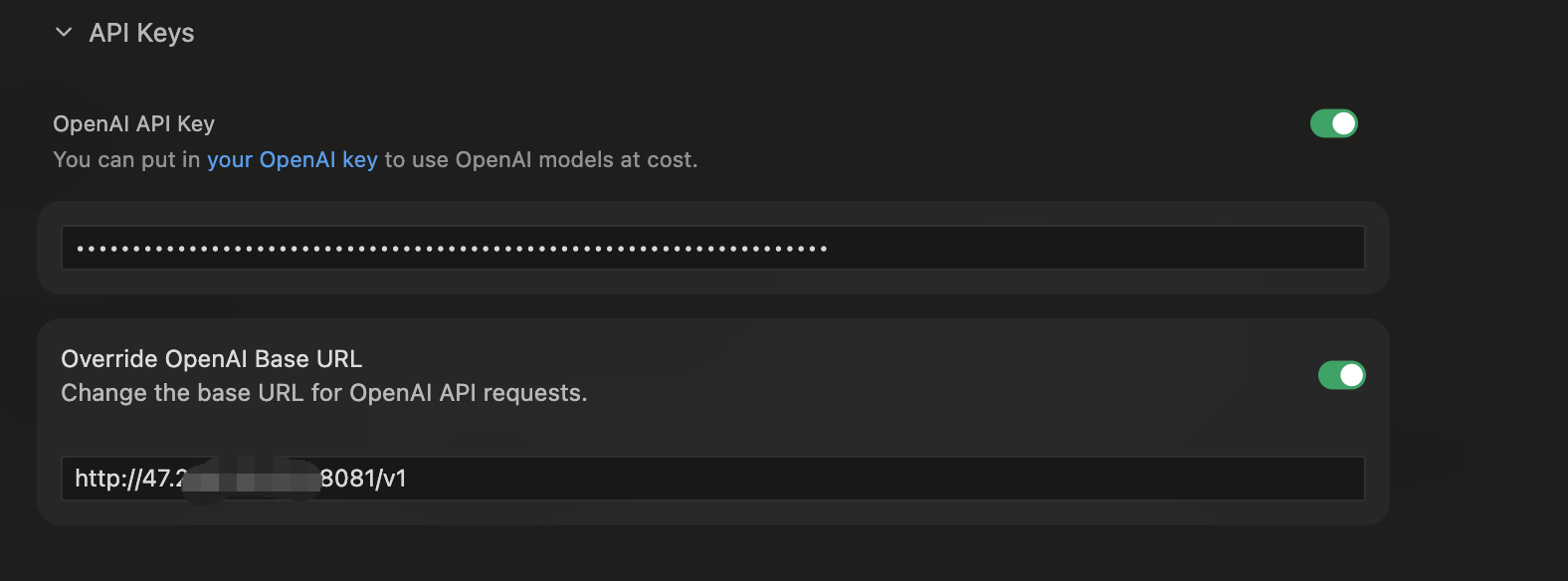
一、 cursor 中配置 sub2api 的url和key
注意这个地方只能写/v1,请求会走/v1/chat/completions
二、配置模型gpt模型
这一步有两种实现方案
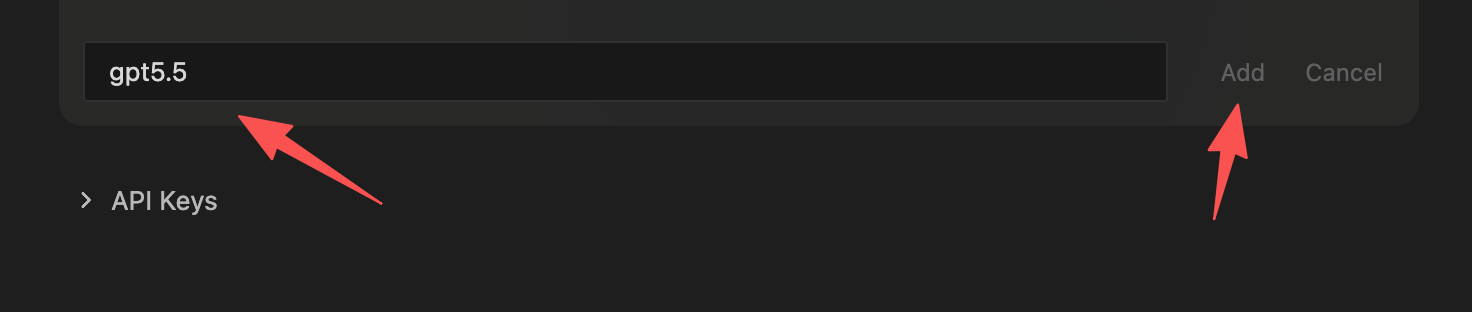
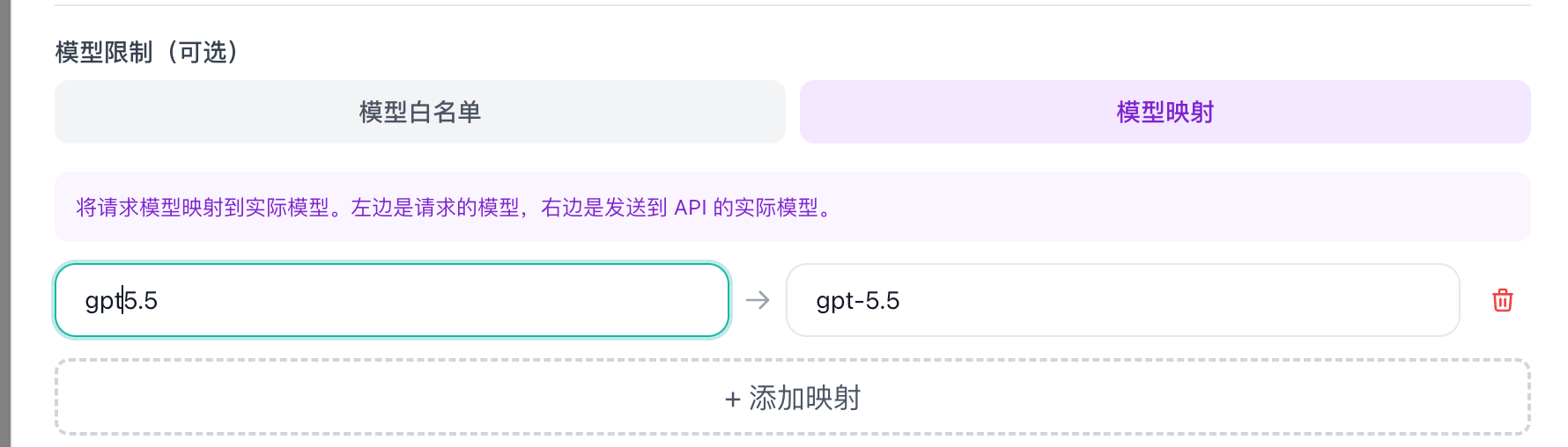
方案一(在cursor设置中添加自定义gpt模型)
这种方式比较简单,直接在cursor设置中添加自定义模型即可,然后在sub2api中添加映射,缺点是cursor自定义模型不能设置推理强度
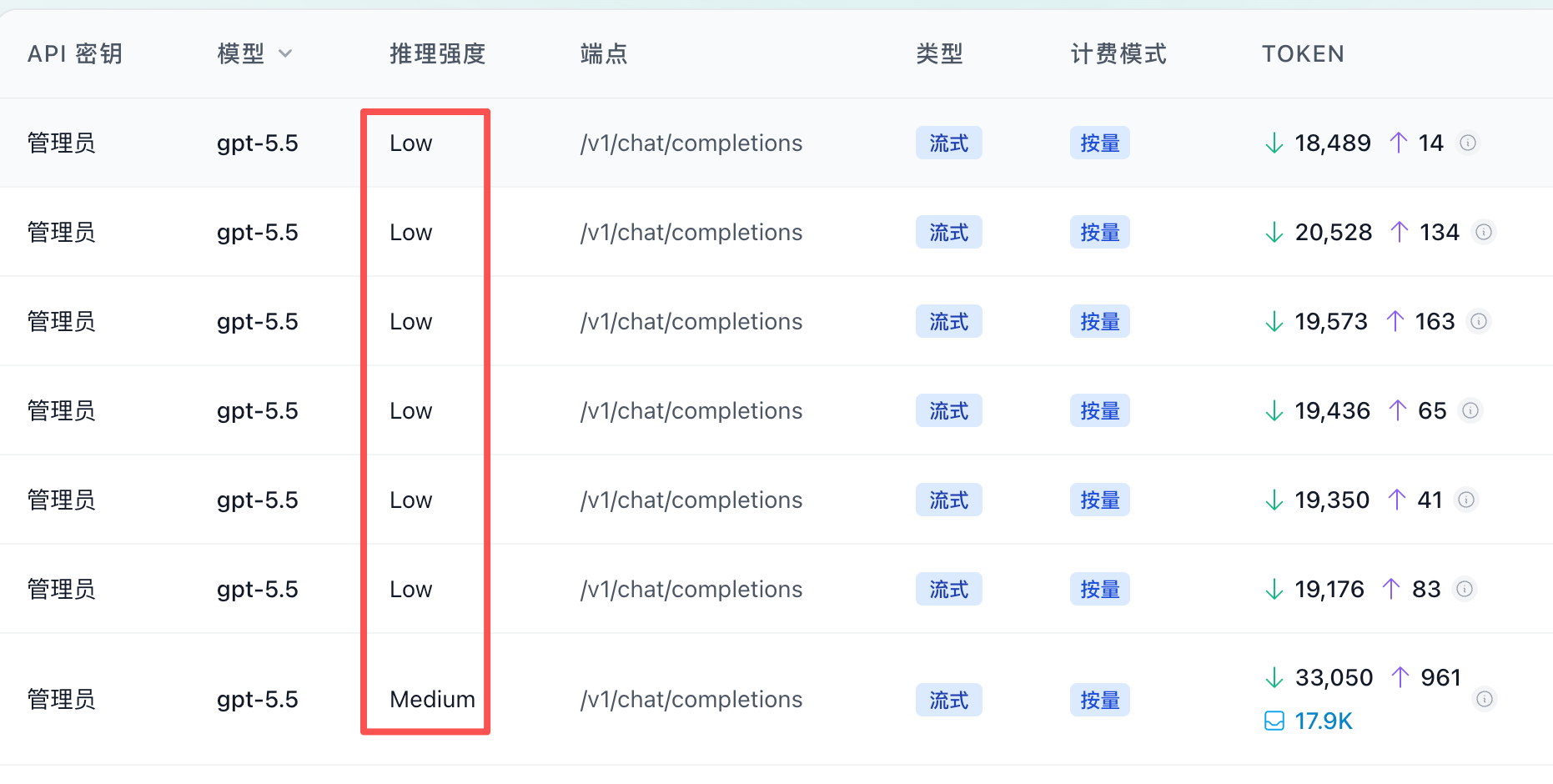
方案二(使用cursor自带的gpt模型)推荐,可设置推理强度
这个方案麻烦点,不过可以不用手动在cursor中添加自定义模型,也不用再sub2api中添加模型映射。
不能直接使用的原因
之所以不能直接使用cursor自带的模型,是因为使用自带的模型后请求的body结构不一样,会出现如下错误:
{
	"error": "ERROR_PROVIDER_ERROR",
	"details": {
		"title": "Provider Error",
		"detail": "Provider returned error: {\"error\":{\"message\":\"Unsupported parameter: user\",\"type\":\"invalid_request_error\"}}",
		"isRetryable": false,
		"additionalInfo": {},
		"buttons": [],
		"planChoices": []
	},
	"isExpected": true
}
说白了就是不支持user参数
处理方案
既然不支持user 参数,那将这个参数去掉就好了,在cursor中不要直接配置sub2api的端口,中间在加一个代理,将这个user参数去除掉就一切正常了。
我自己是用go语言写了个简单的程序去处理这个,这样资源开销比较小
package main

import (
        "bytes"
        "encoding/json"
        "errors"
        "io"
        "log"
        "net"
        "net/http"
        "net/http/httputil"
        "net/url"
        "os"
        "strconv"
        "strings"
        "time"
)

const defaultMaxBodyBytes int64 = 64 << 20 // 64 MiB

func main() {
        listenAddr := envString("LISTEN_ADDR", ":18081")
        upstreamRaw := envString("UPSTREAM_URL", "http://127.0.0.1:8080")
        maxBodyBytes := envInt64("MAX_BODY_BYTES", defaultMaxBodyBytes)
        logRequestBody := envBool("LOG_REQUEST_BODY", true)

        upstream, err := url.Parse(upstreamRaw)
        if err != nil || upstream.Scheme == "" || upstream.Host == "" {
                log.Fatalf("invalid UPSTREAM_URL %q: %v", upstreamRaw, err)
        }

        proxy := newReverseProxy(upstream)
        handler := newProxyHandler(proxy, maxBodyBytes, logRequestBody)

        server := &http.Server{
                Addr:              listenAddr,
                Handler:           handler,
                ReadHeaderTimeout: 15 * time.Second,
        }

        log.Printf("sub2api proxy listening on %s, upstream=%s, log_request_body=%t", listenAddr, upstream.String(), logRequestBody)
        if err := server.ListenAndServe(); err != nil && !errors.Is(err, http.ErrServerClosed) {
                log.Fatalf("proxy server failed: %v", err)
        }
}

func newProxyHandler(proxy *httputil.ReverseProxy, maxBodyBytes int64, logRequestBody bool) http.Handler {
        return http.HandlerFunc(func(w http.ResponseWriter, r *http.Request) {
                start := time.Now()
                requestID := firstNonEmpty(r.Header.Get("X-Request-Id"), r.Header.Get("X-Request-ID"))

                if shouldInspectBody(r) {
                        if err := inspectAndRestoreBody(r, maxBodyBytes, logRequestBody); err != nil {
                                log.Printf("request rejected method=%s path=%s request_id=%q error=%v", r.Method, r.URL.Path, requestID, err)
                                http.Error(w, err.Error(), http.StatusBadRequest)
                                return
                        }
                }

                log.Printf("proxy request method=%s path=%s request_id=%q remote=%s", r.Method, r.URL.Path, requestID, clientIP(r))
                proxy.ServeHTTP(w, r)
                log.Printf("proxy completed method=%s path=%s request_id=%q latency_ms=%d", r.Method, r.URL.Path, requestID, time.Since(start).Milliseconds())
        })
}

func shouldInspectBody(r *http.Request) bool {
        return r.Body != nil && methodCanHaveBody(r.Method)
}

func methodCanHaveBody(method string) bool {
        switch method {
        case http.MethodPost, http.MethodPut, http.MethodPatch, http.MethodDelete:
                return true
        default:
                return false
        }
}

func inspectAndRestoreBody(r *http.Request, maxBodyBytes int64, logRequestBody bool) error {
        if r.Body == nil {
                return nil
        }
        defer r.Body.Close()

        limited := http.MaxBytesReader(nil, r.Body, maxBodyBytes)
        body, err := io.ReadAll(limited)
        if err != nil {
                return err
        }

        if isChatCompletionsRequest(r) {
                filteredBody, removed, err := removeTopLevelJSONKeys(body, "user")
                if err != nil {
                        log.Printf("chat parameter filter skipped path=%s error=%v", r.URL.Path, err)
                } else if removed {
                        log.Printf("chat parameter filter removed_keys=user path=%s original_bytes=%d filtered_bytes=%d", r.URL.Path, len(body), len(filteredBody))
                        body = filteredBody
                }
        }

        if len(body) > 0 {
                logRequestBodyMetadata(r, body)
                if logRequestBody {
                        log.Printf("request body method=%s path=%s body=%s", r.Method, r.URL.Path, string(body))
                }
        }

        // Parameter filtering will be added here later. For now this is a no-op
        // that proves the read -> restore -> forward flow works.
        r.Body = io.NopCloser(bytes.NewReader(body))
        r.ContentLength = int64(len(body))
        r.GetBody = func() (io.ReadCloser, error) {
                return io.NopCloser(bytes.NewReader(body)), nil
        }
        r.Header.Set("Content-Length", strconv.Itoa(len(body)))
        return nil
}

func isChatCompletionsRequest(r *http.Request) bool {
        return r.Method == http.MethodPost && r.URL.Path == "/v1/chat/completions"
}

func removeTopLevelJSONKeys(body []byte, keys ...string) ([]byte, bool, error) {
        var payload map[string]json.RawMessage
        if err := json.Unmarshal(body, &payload); err != nil {
                return nil, false, err
        }

        removed := false
        for _, key := range keys {
                if _, ok := payload[key]; ok {
                        delete(payload, key)
                        removed = true
                }
        }
        if !removed {
                return body, false, nil
        }

        filteredBody, err := json.Marshal(payload)
        if err != nil {
                return nil, false, err
        }
        return filteredBody, true, nil
}

func logRequestBodyMetadata(r *http.Request, body []byte) {
        var payload struct {
                Model  string `json:"model"`
                Stream *bool  `json:"stream"`
        }
        if err := json.Unmarshal(body, &payload); err != nil {
                log.Printf("request body metadata method=%s path=%s body_bytes=%d json_valid=false", r.Method, r.URL.Path, len(body))
                return
        }

        stream := "unset"
        if payload.Stream != nil {
                stream = strconv.FormatBool(*payload.Stream)
        }
        log.Printf("request body metadata method=%s path=%s model=%q stream=%s body_bytes=%d json_valid=true", r.Method, r.URL.Path, payload.Model, stream, len(body))
}

func newReverseProxy(upstream *url.URL) *httputil.ReverseProxy {
        proxy := httputil.NewSingleHostReverseProxy(upstream)
        originalDirector := proxy.Director
        proxy.Director = func(r *http.Request) {
                originalHost := r.Host
                originalDirector(r)
                r.Host = upstream.Host
                if originalHost != "" {
                        r.Header.Set("X-Forwarded-Host", originalHost)
                }
                r.Header.Set("X-Forwarded-Proto", forwardedProto(r))
        }
        proxy.FlushInterval = -1
        proxy.Transport = &http.Transport{
                Proxy: http.ProxyFromEnvironment,
                DialContext: (&net.Dialer{
                        Timeout:   30 * time.Second,
                        KeepAlive: 30 * time.Second,
                }).DialContext,
                ForceAttemptHTTP2:     true,
                MaxIdleConns:          100,
                MaxIdleConnsPerHost:   100,
                IdleConnTimeout:       90 * time.Second,
                TLSHandshakeTimeout:   10 * time.Second,
                ExpectContinueTimeout: 1 * time.Second,
        }
        proxy.ErrorHandler = func(w http.ResponseWriter, r *http.Request, err error) {
                log.Printf("upstream error method=%s path=%s error=%v", r.Method, r.URL.Path, err)
                http.Error(w, "upstream unavailable", http.StatusBadGateway)
        }
        return proxy
}

func forwardedProto(r *http.Request) string {
        if proto := r.Header.Get("X-Forwarded-Proto"); proto != "" {
                return proto
        }
        if r.TLS != nil {
                return "https"
        }
        return "http"
}

func clientIP(r *http.Request) string {
        if value := r.Header.Get("X-Forwarded-For"); value != "" {
                parts := strings.Split(value, ",")
                return strings.TrimSpace(parts[0])
        }
        host, _, err := net.SplitHostPort(r.RemoteAddr)
        if err != nil {
                return r.RemoteAddr
        }
        return host
}

func envString(key, fallback string) string {
        if value := strings.TrimSpace(os.Getenv(key)); value != "" {
                return value
        }
        return fallback
}

func envInt64(key string, fallback int64) int64 {
        value := strings.TrimSpace(os.Getenv(key))
        if value == "" {
                return fallback
        }
        parsed, err := strconv.ParseInt(value, 10, 64)
        if err != nil || parsed <= 0 {
                log.Printf("invalid %s=%q, using default %d", key, value, fallback)
                return fallback
        }
        return parsed
}

func envBool(key string, fallback bool) bool {
        value := strings.ToLower(strings.TrimSpace(os.Getenv(key)))
        if value == "" {
                return fallback
        }
        switch value {
        case "1", "true", "yes", "y", "on":
                return true
        case "0", "false", "no", "n", "off":
                return false
        default:
                log.Printf("invalid %s=%q, using default %t", key, value, fallback)
                return fallback
        }
}

func firstNonEmpty(values ...string) string {
        for _, value := range values {
                if value != "" {
                        return value
                }
        }
        return ""
}
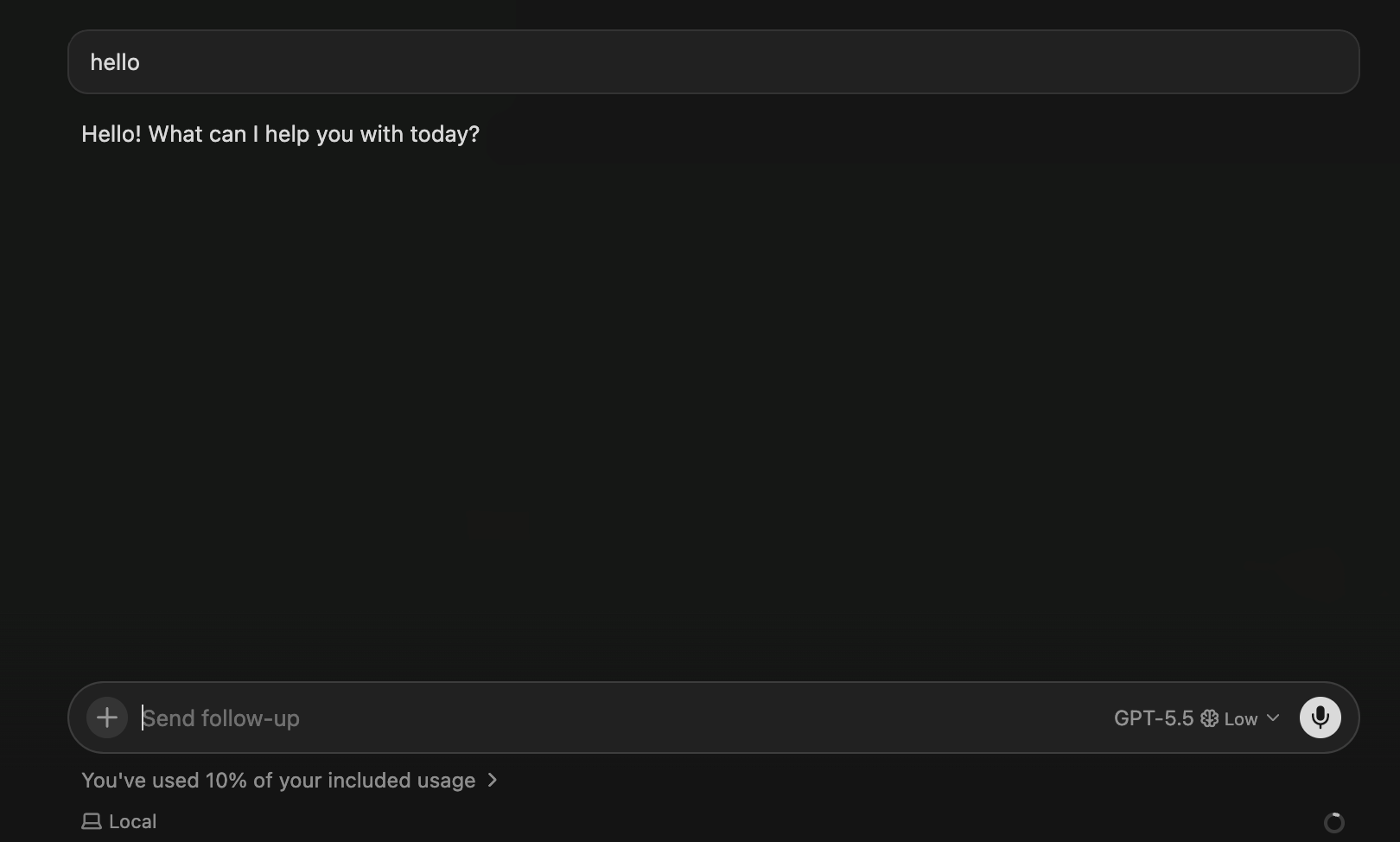
最终效果:
4 个帖子 - 3 位参与者
来源: linux.do查看原文